
About the Institute
Who we are, what we set out to do, and how the institute is organised.
Basanti Government ITI
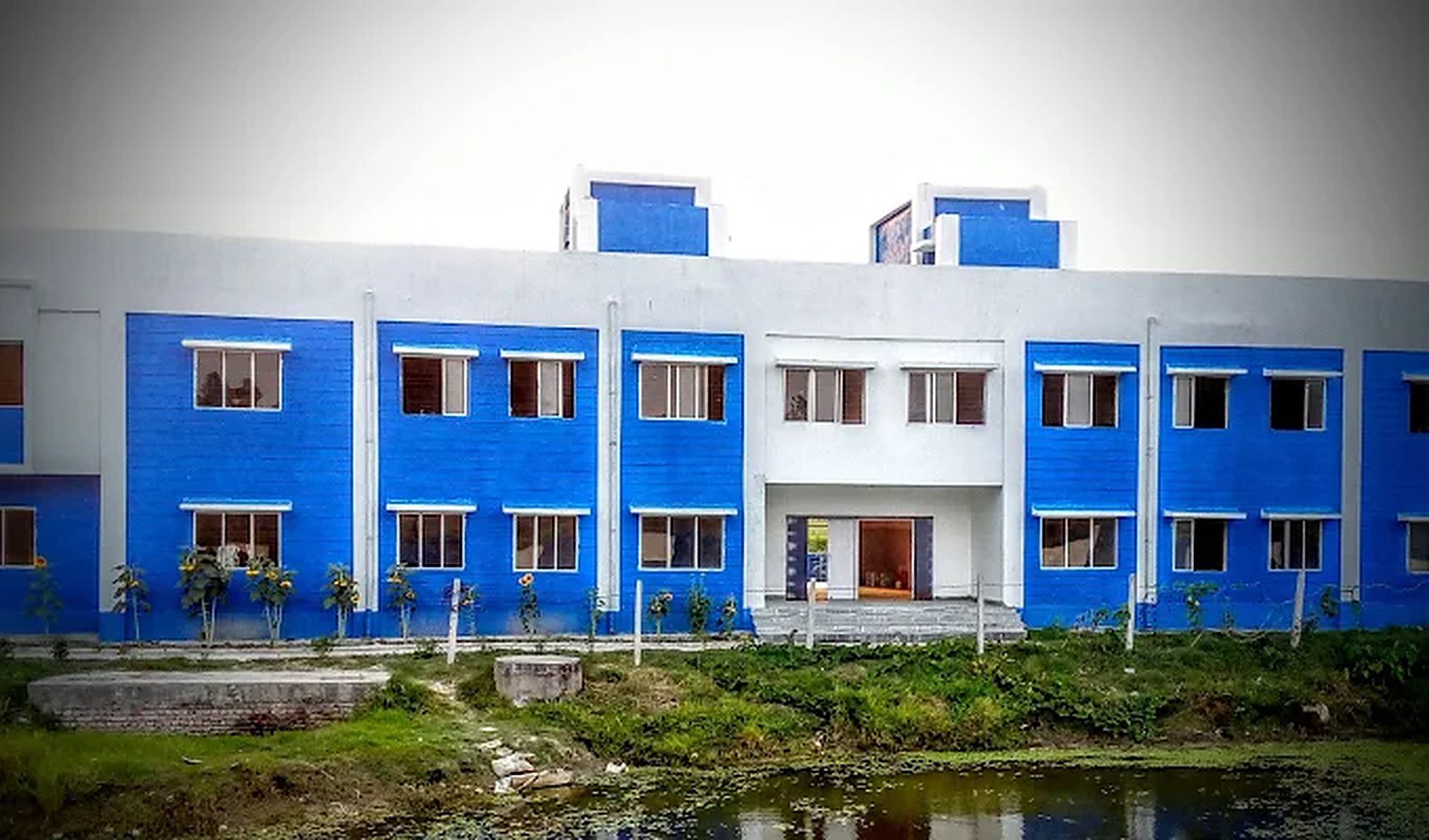
Basanti Government Industrial Training Institute is a government-run Industrial Training Institute in the Basanti block of South 24 Parganas, West Bengal, established in 2016 and affiliated to the National Council for Vocational Training.
The institute functions under the Technical Education, Training & Skill Development Department, Government of West Bengal, and delivers courses under the Craftsman Training Scheme (CTS) framed by the Directorate General of Training, Ministry of Skill Development & Entrepreneurship, Government of India.
Basanti lies at the edge of the Sundarbans. Households here depend largely on agriculture, inland fishery and seasonal migration for work. An ITI in this block changes what a Class X pass-out can realistically do next: instead of leaving the district untrained, a young person can qualify in a recognised trade close to home and enter industry, apprenticeship or self-employment with a certificate that is accepted everywhere in India.
Nine trades are on offer — Electrician, Fitter, Electronics Mechanic, Mechanic Motor Vehicle, Refrigeration & Air Conditioning Technician, Surveyor, COPA, Welder and Dress Making — spanning heavy engineering, automobile, electrical, construction, IT and apparel sectors.
Vision, mission and objectives
Vision
To be a centre of dependable vocational training for the Sundarbans region, where every trainee leaves with a skill that industry recognises and a certificate that opens doors.
Mission
To deliver the DGT syllabus honestly and completely — full practical hours, working equipment, qualified instructors — and to connect every passing-out trainee to an apprenticeship, a job or a viable self-employment path.
Quality policy
Regular attendance, safe workshop practice, maintained machinery, transparent assessment and a grievance route that trainees can actually use.
Our objectives
- Provide semi-skilled and skilled manpower to industry as per the National Occupational Standards.
- Reduce distress migration by creating employable skills within the block.
- Encourage self-employment through trades with a low set-up cost — tailoring, electrical work, AC servicing, fabrication and computer services.
- Extend training opportunity to women trainees and to candidates from SC, ST, OBC, minority and economically weaker families.
- Maintain workshops, tools and safety practice to the standard prescribed for an affiliated institute.
- Keep records, admissions and assessment transparent and open to inspection.
Institute at a glance
| Name | Basanti Government Industrial Training Institute |
|---|---|
| Type | Government Industrial Training Institute |
| Established | 2016 |
| Affiliation | NCVT, DGT, Government of India |
| MIS code | GR19000146 |
| Scheme | Craftsman Training Scheme (CTS) |
| Trades | 9 |
| District | South 24 Parganas, West Bengal |
| Nearest station | Canning (Sealdah South Section, Eastern Railway) |
Principal’s message
Amit Kumar Datta
Principal
Basanti Govt. ITI
Welcome to Basanti Government Industrial Training Institute.
If you are reading this page, you are most likely a young person who has just finished Madhyamik and is deciding what to do next — or a parent trying to help them decide. Let me tell you plainly what this institute is, and what it is not.
An Industrial Training Institute teaches a trade. Not a subject, a trade. At the end of it you will hold a National Trade Certificate awarded by the National Council for Vocational Training, and that certificate is a statement about what your hands can do — that you can wire a distribution board, overhaul an engine, read a drawing and cut to it, lay out a survey line, charge an air-conditioner, run an office computer, or stitch a garment to a customer’s measurements, correctly and safely and without somebody standing over you. It is recognised across India, for employment, for apprenticeship, for government recruitment and for work abroad.
I want to be honest about the effort that requires. Most of your week here will be spent standing at a bench or a machine, not sitting in a classroom. You will make mistakes in front of an instructor and be corrected in front of your classmates. You will be asked to come on time, to wear your safety equipment without being reminded, and to leave your workspace clean. Trainees who attend regularly and take the practical hours seriously leave here employable. Those who treat the workshop as a formality leave with a certificate and not much else, and the difference shows in the first interview.
To parents and guardians, particularly those of you from Basanti, Gosaba, Canning, Jharkhali and the surrounding islands, I would say this. There is an old idea in our families that a trade is what you settle for when studies do not work out. That idea is out of date, and it costs our young people dearly. A qualified electrician, fitter, welder or AC technician in this country today is in short supply and is paid accordingly, while thousands of general graduates wait years for work that never comes. Sending your child to an ITI is not a step down. For many families here it is the shortest honest route from Class X to an income earned with dignity, close enough to home that the family does not have to break up to survive.
I would also encourage the girls of this region and their families to look at us seriously. Every trade in this institute is open to women, and our women trainees do well — in COPA, in Dress Making, in Electronics Mechanic and in Surveyor especially. A skill is the most portable form of security a young woman can be given.
To the employers and establishments of the district: our Training & Placement Cell would like to hear from you. Tell us what skills you are short of and we will train towards them. Take our trainees as apprentices under the Apprentices Act and judge them by their work. That conversation between an institute and the industry around it is what keeps training honest and relevant, and we are open to it at any time.
Finally, a word about how we intend to run this institute. Admissions here are made through the state’s centralised online system on merit — nobody is authorised to collect money for a seat, and any such demand should be reported to me in writing. Our workshops, our staff list and our records are open to inspection. If a trainee or a guardian has a grievance, my office is open during working hours, and it will be heard.
Come and see the campus. Talk to the instructors. Look at the machines your child would be trained on. Then decide.
Amit Kumar Datta
Principal, Basanti Government Industrial Training Institute
Committees and cells
Statutory and functional committees constituted at the institute. Membership is displayed on the institute notice board and is available on request.
Institute Management Committee (IMC)
Oversees institute functioning, industry linkage and utilisation of funds, with representation from industry, staff and the department.
Training & Placement Cell
Coordinates apprenticeship registration, campus drives, employer contact and career counselling for trainees.
Anti-Ragging Committee
Constituted as per UGC/AICTE-style anti-ragging norms adopted by the institute. Ragging in any form is prohibited and punishable.
Internal Complaints Committee (ICC)
Handles complaints of sexual harassment at the workplace under the Act of 2013, and ensures a safe environment for women trainees and staff.
Grievance Redressal Committee
Receives and disposes of trainee and guardian grievances relating to training, examination, facilities or conduct.
SC/ST/OBC & Minority Cell
Assists eligible trainees with scholarships, certificates and welfare entitlements.
Want to see the trades in detail?
Duration, entry qualification, what you learn and where it leads — trade by trade.